Data-Driven Racing Analysis
Horse Racing Betting in the UK: A Data-Driven Guide
Market statistics, regulatory analysis and value-betting frameworks from nine years of covering the UK racing industry.
By Horse Racing Betting Analyst
 Available in US
Nine years of staring at form guides, crunching bookmaker margins and watching the UK racing market shift beneath my feet have taught me one thing above all else: most horse racing betting content is written for search engines, not for punters. The guides you find online recycle the same surface-level definitions, the same “best bookmaker” lists, the same vague promises of value — and almost none of them show you the actual numbers behind this industry.
That changes here. This guide is built on data from the British Horseracing Authority, the UK Gambling Commission, the Horserace Betting Levy Board and the Racing Post’s annual surveys — the same sources I use to inform my own betting decisions. The UK horse racing betting market sits within a broader horse and sports betting sector worth an estimated 3.7 billion pounds, and the wider racing industry contributes roughly 4.1 billion pounds a year to the British economy while supporting around 85,000 jobs. Horse racing in Britain is not a quaint tradition clinging on — it is a significant commercial ecosystem where your money interacts with regulatory forces, levy structures, tax policy and a rapidly evolving technology landscape.
Whether you are placing your first each-way bet on the Grand National or refining a value-oriented staking plan across midweek cards, the mechanics matter. The regulations matter. The market dynamics matter. I have structured this guide to take you from the fundamentals of how British racing betting works through to the industry trends that will shape your experience over the coming seasons. Every claim is backed by a specific number or a named source, because I believe punters deserve the same quality of analysis that institutional operators rely on.
Table of Contents
- The Numbers, Rules and Edges That Shape Every Bet You Place
- The UK Horse Racing Betting Market in Numbers
- How Horse Racing Betting Works in Britain
- Flat Racing and National Hunt: Two Disciplines, Two Approaches
- Choosing a Bookmaker: What the Data Says
- Betting Strategy Fundamentals for Horse Racing
- Betting Exchanges: An Alternative to Bookmakers
- How UK Horse Racing Betting Is Regulated
- Industry Outlook: Prize Money, Attendance and Turnover Trends
- Frequently Asked Questions
The Numbers, Rules and Edges That Shape Every Bet You Place
- UK horse racing generated 766.7 million pounds in remote betting GGY in the year to March 2025, but total betting turnover fell 4.3 percent across 2025 — a market contracting even as racecourse attendance crossed five million for the first time since 2019.
- Affordability checks now trigger at 150 pounds in net monthly deposits, affecting nearly a quarter of active punters surveyed and pushing significant volumes toward the unregulated black market.
- Horse racing betting duty remains at 15 percent while the wider online gambling sector faces steep tax rises, meaning racing-specific value propositions like Best Odds Guaranteed and enhanced each-way terms become more important to protect your returns.
- Every profitable approach starts with understanding odds mechanics, bookmaker margins and the structural differences between flat and jump racing — not with following tips.
- Record prize money of 194.7 million pounds and a new ITV broadcasting deal through 2030 signal long-term commercial health at the premium tier, even as everyday racing fixtures face pressure from declining horse numbers and smaller fields.
The UK Horse Racing Betting Market in Numbers
The first time I pulled the Gambling Commission’s raw data files and laid them against the BHA’s quarterly racing reports, I realised how disconnected most betting guides are from the reality of this market. Everyone talks about “the best odds” and “top promotions.” Nobody talks about the fact that total betting turnover on British racing fell by 4.3 percent across 2025, representing a cumulative loss of 10.3 percent since 2023. That is not a blip. That is a structural shift, and it affects every punter reading this page.
UK Horse & Sports Betting Market Size
3.7 billion pounds (2026 estimate)
Remote GGY From Horse Racing
766.7 million pounds (April 2024 — March 2025)
Horse Racing’s Share of Remote Betting GGY
Second behind football (1.3 billion pounds), within a total remote betting GGY of 2.6 billion pounds
Racecourse Attendance
5.031 million in 2025 — first time above 5 million since 2019
Betting Participation Rate
7 percent of UK adults in peak season (April — July), dropping to 4 percent off-season
The tension is clear from those numbers. GGY has remained broadly stable, but actual turnover — the total amount staked — has been sliding. Richard Wayman, the BHA’s Director of Racing, acknowledged the problem when discussing the Q1 2025 data: the nine percent year-on-year drop reflects “a much wider range of factors” beyond the racing product itself. Tightening regulation, affordability checks pushing higher-staking punters off licensed platforms, and the migration of some activity to the black market all play a role. I will cover each of these later. For now, the core paradox: the money flowing through legitimate channels is contracting even as live attendance surges past five million for the first time since the pandemic.
Seven percent of UK adults placed a bet on horse racing in the peak months between April and July 2025. By autumn, that figure dropped back to four percent — a seasonal swing that mirrors the pattern of major festivals like Royal Ascot, the Derby and the Glorious Goodwood meeting driving casual participation.
The financial architecture of British racing is unlike any other sport. Every pound staked with a licensed bookmaker contributes, via operator tax obligations, to the Horserace Betting Levy — a statutory mechanism channelling money into prize funds, integrity services and veterinary science. The levy yield hit a record 108 million pounds in 2024-25. Total prize money reached 194.7 million pounds in 2025. So while turnover is falling, the industry has protected the financial rewards that attract owners and trainers. How long that balance holds is a defining question.
How Horse Racing Betting Works in Britain
I remember my first trip to Newbury as a teenager, standing in front of the Tote windows and having absolutely no idea what “a pound each way” actually meant in mechanical terms. Nobody explained it to me then, and honestly, most online guides still do a poor job. So here is the version I wish someone had given me twenty years ago.
Horse racing betting in Britain operates through two parallel systems. The dominant one is fixed-odds betting, where you lock in a price with a bookmaker at the moment you place your bet. If your horse wins at 5/1, you receive five times your stake plus your stake back, regardless of what happens to the price afterwards. The second system is pool betting, primarily through the Tote, where all stakes on a given bet type are pooled together and the payout is calculated after the race based on how many winning tickets there are.
Within fixed-odds betting, there are two environments: on-course (physically at the racecourse, dealing with ring bookmakers or the Tote) and off-course (online, via apps, over the phone, or in a betting shop). Off-course online betting dominates. The overwhelming majority of horse racing bets in the UK are placed remotely through UKGC-licensed operators.
Every licensed bookmaker operating in the UK holds a UKGC licence and must comply with conditions covering fair terms, dispute resolution, self-exclusion tools and responsible gambling measures. Your funds are subject to regulatory protections that do not exist on unlicensed platforms.
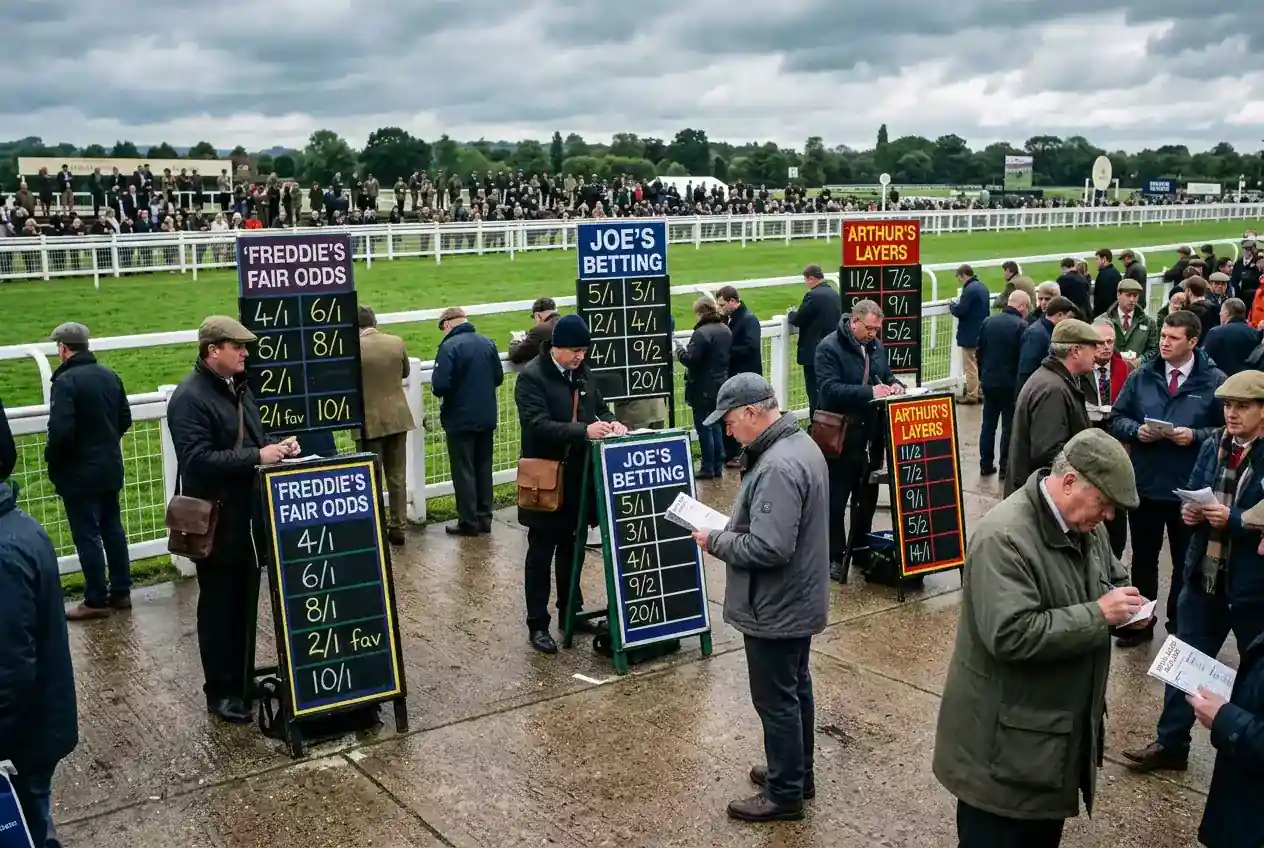
The process itself is straightforward: open an account, verify your identity, deposit funds, navigate to racing, select a horse and bet type, enter your stake and confirm. Returns are based on the odds at placement — or at Starting Price if you opted for that. What trips people up is not the mechanics but understanding what different bet types actually mean for your returns and how odds translate into real-world value.
The bet type you choose determines not just what needs to happen for you to win, but how your returns are structured. Let me break down the core options.
Core Bet Types at a Glance
Horse racing offers a wider menu of bet types than almost any other sport. At the foundation sit three single-bet options: the win bet (your horse must finish first), the place bet (your horse must finish in the top two, three or four, depending on field size and race type) and the each-way bet, which is effectively a win bet and a place bet combined into one. Each-way is the bread and butter of British racing punters — it gives you a safety net if your selection runs well but does not quite win.
| Bet Type | What Needs to Happen | Risk Level |
|---|---|---|
| Win | Horse finishes first | Higher — one outcome only |
| Place | Horse finishes in the top 2, 3 or 4 | Lower — multiple finishing positions qualify |
| Each-Way | Two bets in one: win + place | Medium — costs double the unit stake, but pays out on both components if the horse wins |
| Forecast | Pick 1st and 2nd in the correct order | High — two horses, exact sequence |
| Tricast | Pick 1st, 2nd and 3rd in the correct order | Very high — three horses, exact sequence |
Beyond singles, there are multiple bets. A double links two selections in separate races — both must win for the bet to pay. A treble requires three winners. Accumulators extend the chain further, with four, five or more legs. The attraction is obvious: small stakes can produce large returns because the winnings roll from one leg to the next. The risk is equally obvious: one loser kills the entire bet.
Then there are full-cover bets — the Lucky 15, Yankee, Heinz and their cousins. These bundle every possible combination of doubles, trebles and accumulators from a set of selections, along with singles in some cases. A Lucky 15, for example, takes four selections and produces fifteen bets: four singles, six doubles, four trebles and one four-fold accumulator. They cost more but survive a losing leg far better than a straight accumulator.
For a detailed breakdown of every bet type with worked payout examples, I have written a dedicated guide to horse racing bet types explained that covers everything from forecast mechanics to Rule 4 deductions.
Quick Each-Way Example
Suppose you place a 10-pound each-way bet at 8/1 on a horse in a 12-runner handicap. Your total outlay is 20 pounds (10 pounds for the win part, 10 pounds for the place part). Standard each-way terms in a 12-runner race are one-quarter the odds for the first four places.
If your horse wins: win part returns 10 x 8 + 10 = 90 pounds. Place part returns 10 x 2 + 10 = 30 pounds. Total return: 120 pounds on a 20-pound stake.
If your horse finishes 2nd, 3rd or 4th: win part loses. Place part returns 30 pounds. Total return: 30 pounds on a 20-pound stake — a net profit of 10 pounds.
Reading Fractional and Decimal Odds
Odds are the language of betting, and in UK horse racing you will encounter two main formats. Fractional odds — the traditional British system — express your potential profit relative to your stake. Decimal odds, more common in Europe and on exchanges, express your total return per unit staked including the stake itself.
Fractional vs Decimal: Same Horse, Same Bet
Fractional: 5/1 means for every 1 pound staked, you profit 5 pounds. Total return on a 10-pound bet: 60 pounds (50 pounds profit + 10 pounds stake).
Decimal: 6.00 means your total return is 6 times your stake. Total return on a 10-pound bet: 60 pounds.
They are mathematically identical. 5/1 in fractional = 6.00 in decimal. The conversion is simple: divide the first number by the second and add 1.
Where it gets interesting — and where most guides stop short — is in understanding what odds really represent. Every set of odds implies a probability. A horse at 4/1 (5.00 decimal) implies a 20 percent chance of winning. A horse at even money (2.00 decimal) implies 50 percent. But bookmakers do not price races at true probabilities. They build in a margin, known as the overround, which ensures that if they balanced their book perfectly, they would profit regardless of the result. A typical UK horse race might have an overround of 115 to 125 percent — meaning the implied probabilities of all runners, when added together, exceed 100 percent. That gap is the bookmaker’s edge.
Calculating Implied Probability From Fractional Odds
Take odds of 7/2. The formula is: stake / (profit + stake) x 100.
So: 2 / (7 + 2) x 100 = 22.2 percent implied probability.
If your own assessment gives that horse a 28 percent chance of winning, the odds are offering you value. If your assessment is 18 percent, they are not.
Understanding this is fundamental. Every profitable betting approach ultimately comes down to finding situations where the bookmaker’s implied probability is lower than the horse’s actual chance of winning. For a much deeper dive into how starting prices are formed, why odds move throughout the morning, and how to assess bookmaker margins systematically, see my full guide to horse racing odds explained.
Flat Racing and National Hunt: Two Disciplines, Two Approaches
Ask me in June and I will tell you I am a flat racing analyst at heart — the speed, the draw puzzles, the mathematical precision of sprint handicaps. Ask me in January and I will swear that National Hunt is the purest test of a horse’s ability: stamina over fences, the courage to jump at pace, the unpredictability of soft ground and a field of twelve going into the third-last. The truth is that both codes demand completely different betting thinking, and too many punters treat them as one sport.
| Factor | Flat Racing | National Hunt |
|---|---|---|
| Season | Primarily April to October (all-weather runs year-round) | October to April |
| Obstacles | None — speed on the level | Hurdles (smaller) and fences (larger, steeplechases) |
| Distances | 5 furlongs to 2 miles 6 furlongs | 2 miles to 4 miles 4 furlongs |
| Key factors | Draw, pace, going, class | Jumping ability, stamina, going, course form |
| Average field size (2025) | 8.90 runners | 7.84 runners |
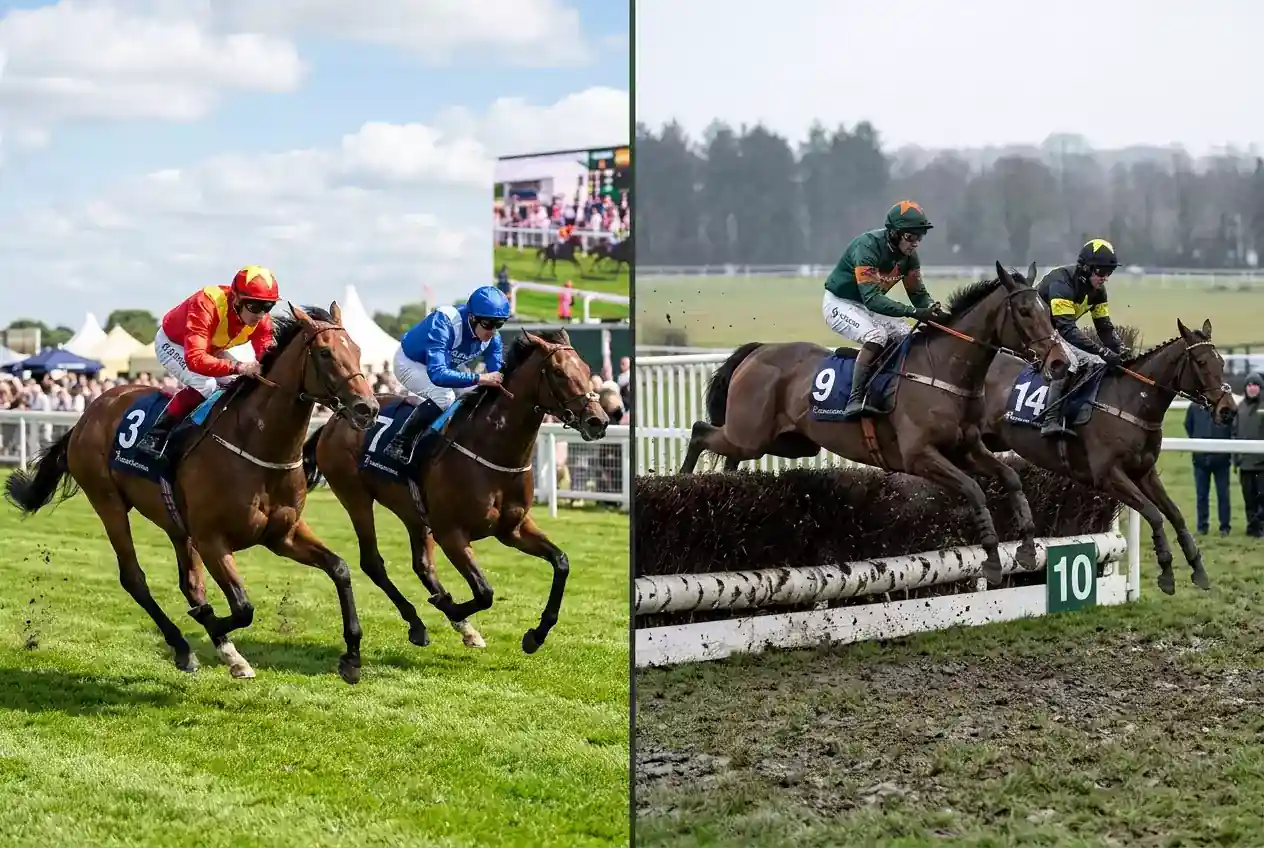
Those average field sizes matter more than most people realise. In 2025, flat fields averaged 8.90 runners, down from 9.14 in 2024. Jump fields dropped more sharply to 7.84, from 8.49. Smaller fields compress the each-way value — fewer runners mean fewer guaranteed places and tighter place terms from bookmakers. They also make form study more decisive, because there are fewer unknowns in a six-runner novice hurdle than in a twenty-runner heritage handicap at York.
From a betting perspective, flat racing rewards data-driven analysis: draw bias, sectional times, speed ratings, track configuration. The draw at Chester or Beverley on soft ground can be worth several lengths before the stalls open. National Hunt rewards patience and course knowledge: which trainers target which festivals, how a horse handles a particular set of fences, whether the stamina profile suits a grinding three-mile chase. Both codes have their edges, but they require different analytical toolkits.
Choosing a Bookmaker: What the Data Says
I get asked “which bookmaker should I use?” more than any other question. My honest answer has never been a single name. It has always been a set of criteria — and the weight you put on each criterion depends on how you bet.
The UK licensed bookmaker landscape is substantial but consolidating. Among major operators, competition revolves around odds quality, Best Odds Guaranteed policies, streaming coverage, market depth and mobile platform reliability.
The tax environment directly affects you. Horse racing betting retained its 15 percent duty rate in the November 2025 budget, a deliberate exemption recognising racing’s economic contribution. But the broader sector faces steep rises — Remote Gaming Duty nearly doubles from April 2026 — and operators across the board are under pressure to absorb those costs. Expect tighter margins, fewer generous offers, and some smaller operators exiting or merging.
What to Evaluate in a Horse Racing Bookmaker
- UKGC licence active and in good standing — verify on the Commission’s public register
- Best Odds Guaranteed offered on UK and Irish racing (check whether it covers all meetings or only selected ones)
- Live streaming coverage — how many UK race meetings are streamed, and is a funded account or placed bet required?
- Market depth — are early prices available from the night before, or only from the morning of the race?
- Each-way terms — do they extend to five or six places on large-field handicaps, or stick to standard terms?
- Cash-out availability on horse racing singles and multiples
- App stability and speed during peak Saturday racing
There is a reason I have not listed specific operators here. Bookmaker propositions change constantly — a firm that offers excellent each-way terms this season might pull them back the next. What does not change is the framework above. If you evaluate every operator against these criteria before depositing, you will make a better decision than following any “top five bookmakers” list.
Do
- Hold accounts with more than one licensed bookmaker so you can compare odds before placing
- Check the Best Odds Guaranteed policy for each meeting — some operators exclude all-weather racing or restrict BOG to specific bet types
- Test the streaming and app experience with small stakes before committing to a main account
Don’t
- Choose a bookmaker based solely on a welcome offer — the long-term margin and features matter far more
- Assume all operators offer the same odds — price differences of 10 to 20 percent on the same horse are common, particularly in ante-post markets
- Ignore the operator’s dispute resolution process — read the terms on void bets, Rule 4 deductions and non-runner policies before you need them
Best Odds Guaranteed and Key Promotions
Best Odds Guaranteed is the single most valuable promotion in horse racing betting, and I say that without hesitation. The concept is simple: you take an early price on a horse, and if the Starting Price at the off is higher than the price you took, the bookmaker pays you at the better price. If the SP is lower, you keep your original price. You win either way.
BOG is not universal. Some operators restrict it to certain meeting types (excluding all-weather or international racing), cap the maximum payout uplift, or require a minimum stake. Always check the specific terms before assuming your early price is automatically protected.
Why does BOG matter so much? It fundamentally changes the risk profile of taking early prices. Without BOG, locking in a morning price is a gamble — the horse might drift (making your early price look poor) or shorten (making it the better deal). With BOG, the downside disappears. You capture any market movement in your favour and are shielded from movement against you. Over several hundred bets in a season, the cumulative value is material.
Beyond BOG, the main promotions to watch for in horse racing are enhanced each-way terms on large-field handicaps (paying extra places), accumulator bonuses that add percentage uplifts for winning accas with multiple legs, and refund offers on specific festival races where your horse finishes second or third to the favourite. The promotional landscape is likely to contract as operators absorb the new tax regime, so squeezing every drop of value from the offers that remain becomes more important than ever.
Betting Strategy Fundamentals for Horse Racing
Here is a confession: I spent my first three years of serious punting chasing tips and following newspaper naps, and I lost steadily. It was not until I started treating betting as a structured activity — with a defined bankroll, clear criteria for identifying value, and written records of every bet — that the results turned around. Strategy is not a glamorous word, but it is the dividing line between punters who survive long-term and those who fund the industry’s GGY figures.
The core concept is value betting. A value bet exists when the odds offered on a horse imply a lower probability than your own assessment of its chance of winning. If you believe a horse has a 25 percent chance and the odds imply 15 percent (roughly 11/2), you have a value opportunity. The challenge, of course, is making accurate probability assessments. That requires form study, an understanding of going, class, pace dynamics, and enough discipline to walk away when the value is not there.
Beyond value identification, several structured approaches suit different temperaments. Dutching distributes stakes across multiple horses in one race so that any selection winning returns equal profit — best applied in open handicaps with wide markets. Ante-post betting offers bigger prices but risks your horse not running. Place betting in large fields targets horses with strong place records regardless of win prospects. For detailed walkthroughs with worked examples, see the dedicated horse racing betting strategy guide.
Do
- Define a bankroll you can afford to lose entirely, and stake a fixed percentage per bet (I use between 1 and 3 percent)
- Record every bet: date, race, selection, odds, stake, result, profit/loss — without data, you cannot evaluate your own performance
- Focus on race types and courses you know well rather than trying to bet on everything
Don’t
- Increase stakes after a losing run to “get it back” — this is the single most destructive behaviour in betting
- Confuse a long winning streak with skill — variance in horse racing is enormous, and small sample sizes are meaningless
- Ignore how turnover trends affect the market — betting volumes on racing have been declining year on year, which shifts liquidity patterns and can affect the reliability of market prices
Strategy only works when it is built on accurate information. The starting point for any race analysis is the form guide — and most punters barely scratch its surface.
Form Figures and Going: A Quick Primer
A horse’s form figures are a compressed record of its recent race finishes. The number 1 means it won, 2 means second, 3 means third, 0 means it finished outside the places, P means it pulled up (stopped during the race), F means it fell, and U means it unseated its rider. A dash or slash separates different seasons. So a form line reading 2/1320-1 tells you this horse finished second last season, then in its current campaign has won, finished third, second, unplaced, had a break, and won again. That single string of characters is a narrative — and reading it fluently is the first skill of form analysis.
Going — the official description of ground conditions on a racecourse, measured by the GoingStick and assessed by the clerk of the course. The UK scale runs from Firm (hardest) through Good to Firm, Good, Good to Soft, Soft, and Heavy (most waterlogged). All-weather tracks use a separate scale: Fast, Standard and Slow.
Going matters because different horses have different physical aptitudes for different ground. A big-striding horse that excels on fast ground may struggle in heavy going, where the surface saps energy with every stride. The reverse is equally true — some mudlarks come alive when conditions deteriorate. Look at the form figures alongside the going abbreviations (often shown as letters: F, GF, G, GS, S, HY next to each run) and you quickly build a picture of which surface suits your selection.
Beyond form figures and going, the key elements worth examining are class level (is the horse moving up or down in grade?), course and distance form (has it run well at this track and this trip before?), draw position in flat races (some courses have significant stall biases), and trainer-jockey combinations (some partnerships consistently outperform their individual strike rates). Each of these topics has enough depth to justify its own analysis, and I cover them thoroughly in the horse racing form guide explained section. For now, the point is this: form study is not about reading one line of numbers. It is about building a multi-dimensional profile of the horse, the conditions and the context.
Betting Exchanges: An Alternative to Bookmakers
Most punters spend their entire betting lives on one side of the market: backing a horse to win and hoping for the best. Betting exchanges opened up the other side. On an exchange, you can back a horse (just like with a bookmaker) or lay a horse — effectively betting that it will not win. You become the bookmaker. That single shift changes everything about how you can approach a race.
An exchange is a peer-to-peer marketplace. When you back at 5.0, someone else is laying at 5.0. The exchange matches both sides and takes a commission — typically 2 to 5 percent — on the net winnings. Because no bookmaker margin is built in, exchange odds are often better than fixed-odds prices, particularly on major Saturday afternoon markets.
Lay betting lets you profit when a horse loses. In-play trading — backing at a higher price and laying at a lower price during the race — allows you to lock in a profit or cut a loss before the finish. These tools are standard kit for professional and semi-professional punters and entirely unavailable through traditional bookmakers. But exchanges have limitations: liquidity concentrates on the biggest races, and commission structures can erode marginal edges for high-volume traders.
For a full breakdown of how exchange commission works, when exchange odds genuinely beat bookmaker prices, and how to use lay betting in specific racing scenarios, see the dedicated guide to horse racing betting exchanges. What I want to emphasise here is that exchanges are not a niche product for traders — they are a structural alternative to the bookmaker model, and understanding how they work gives you more options in how you approach any given race.
How UK Horse Racing Betting Is Regulated
Regulation is the invisible architecture of your betting experience. Every price you see, every promotion you claim, every dispute you might raise — all of it operates within a framework set by the UK Gambling Commission under the Gambling Act 2005 (and its subsequent amendments). I spend more time reading UKGC consultations and policy documents than I would like to admit, but the knowledge pays off because regulatory shifts directly affect what you can do, how much you can stake, and what protections you receive.
The basics: any operator offering gambling services to UK consumers must hold a UKGC licence. As of March 2025, there were 3,086 licensed gambling activities, down 2.3 percent from the previous year. Licence conditions require operators to verify customer identity, protect customer funds, offer self-exclusion tools, and comply with advertising codes. Breaches can lead to fines, additional conditions, licence suspension or revocation.
The distinction between licensed and unlicensed is not just regulatory formality. A licensed bookmaker that fails to pay legitimate winnings gives you recourse through the UKGC’s dispute resolution process. With an unlicensed operator, you have nothing — no legal standing, no complaints process, no fund protection.
The tax environment matters too. Horse racing betting kept its 15 percent duty rate in the November 2025 budget — a deliberate exemption. But Remote Gaming Duty is set to nearly double from 21 to 40 percent in April 2026, with the Treasury expecting an additional 1.1 billion pounds by 2029-30. Grainne Hurst of the BGC warned that racing’s income “will now be severely damaged” as operators cut costs despite the nominal exemption. Nevin Truesdale, the former Jockey Club CEO, has argued the Commission risks “slipping into an anti-gambling mode when they should be facilitating safe gambling.” Whatever your view, the practical reality is that the regulatory environment is tightening, operator costs are rising, and those costs filter through to you in tighter odds and more friction.
The single biggest regulatory flashpoint in UK horse racing betting right now is the affordability check regime. It affects more punters than any other policy change, and its consequences are reshaping the market in ways that go far beyond what the regulators intended.
Affordability Checks and Their Market Impact
In February 2025, the threshold for triggering enhanced affordability checks dropped from 500 pounds to 150 pounds in net monthly deposits. That means if you deposit more than 150 pounds net in a calendar month with a licensed operator, you may be asked to provide evidence of your financial circumstances — payslips, bank statements, tax returns. The operator uses this information to assess whether your gambling is affordable relative to your income.
Affordability Check Threshold
150 pounds net monthly deposit (reduced from 500 pounds in February 2025)
Punters Subjected to Checks
23.7 percent of respondents in the Racing Post Big Punting Survey 2025 (up from 16.6 percent in 2023)
Refusal to Provide Documents
61 percent of those surveyed said they would not hand over financial information
Black Market Risk
Roughly 25 percent of punters would consider using an unlicensed operator in response to affordability restrictions
The numbers paint a stark picture. Nearly a quarter of punters surveyed had already been subjected to affordability checks, and 61 percent said they would refuse to hand over financial documents. That refusal does not just mean frustration — it means account restrictions, reduced stakes, or outright closure. For the racing industry, the consequences are measurable: online betting turnover on horse racing has fallen by 1.6 billion pounds since 2022, and a significant portion of that decline is attributed to punters either reducing activity or leaving the licensed market altogether.
The black market dimension is perhaps the most troubling. Data from the International Federation of Horseracing Authorities showed a 522 percent increase in unique customers on 22 monitored unlicensed betting sites between August 2021 and September 2024. One in three punters who stake 1,000 pounds or more per transaction reported using an unregulated bookmaker in the previous twelve months. These unlicensed operators pay no tax, contribute nothing to the betting levy, and offer no responsible gambling safeguards. Nick Timothy, a Conservative MP, captured the political mood by noting that “the words have been warm” from ministers on addressing disproportionate checks, but “solutions” remain absent.
I will not pretend to have a neat answer to this policy tension. Protecting vulnerable gamblers is a legitimate goal. But the current calibration is demonstrably pushing money into channels where there are no protections at all. As a punter, understand the framework, anticipate that checks may apply to your account, and make your own informed decisions.
Industry Outlook: Prize Money, Attendance and Turnover Trends
If you only read the headlines, you would think British racing is in crisis. Turnover is falling. Horse numbers are declining. The regulatory environment is hostile. But spend time with the full data set and a more nuanced picture emerges — one where genuine strengths and genuine threats coexist in uncomfortable proximity.
Start with the positives. Total prize money in British racing hit a record 194.7 million pounds in 2025, a 3.5 percent increase on the previous year. Racecourse contributions accounted for 103.4 million pounds of that total — 53 percent — with the HBLB adding 63.2 million pounds (up 4.6 percent) and owners contributing 26.8 million pounds. Richard Wayman of the BHA described 2025 as a year with “much to be pleased about,” pointing to strong performances at major meetings and rising attendance as evidence that “these events will have a pivotal role to play in attracting more fans to the sport at all levels.” Attendance at British racecourses reached 5.031 million, the first time the five million mark has been crossed since 2019, with average attendance per fixture rising 3.6 percent to 3,526.
Prize Money (2025)
194.7 million pounds — an all-time record, up 3.5 percent
Racecourse Attendance
5.031 million — first time above 5 million since 2019
Betting Turnover Trend
Down 4.3 percent in 2025, cumulative decline of 10.3 percent from 2023
Horses in Training
21,728 in 2025 — down 2.3 percent year on year, declining at roughly 1.5 percent annually since 2022
Now the structural concerns. The horse population in training has fallen to 21,728, continuing a steady decline of around 1.5 percent per year since 2022. Fewer horses mean smaller fields: flat averages dropped to 8.90, jumps to 7.84. BHA modelling projects a further 6 to 7 percent reduction in the number of races run in Britain by 2027 compared to 2024. Smaller fields and fewer races directly affect betting turnover — there are simply fewer betting opportunities per raceday, and smaller fields produce less competitive races that generate less betting interest.
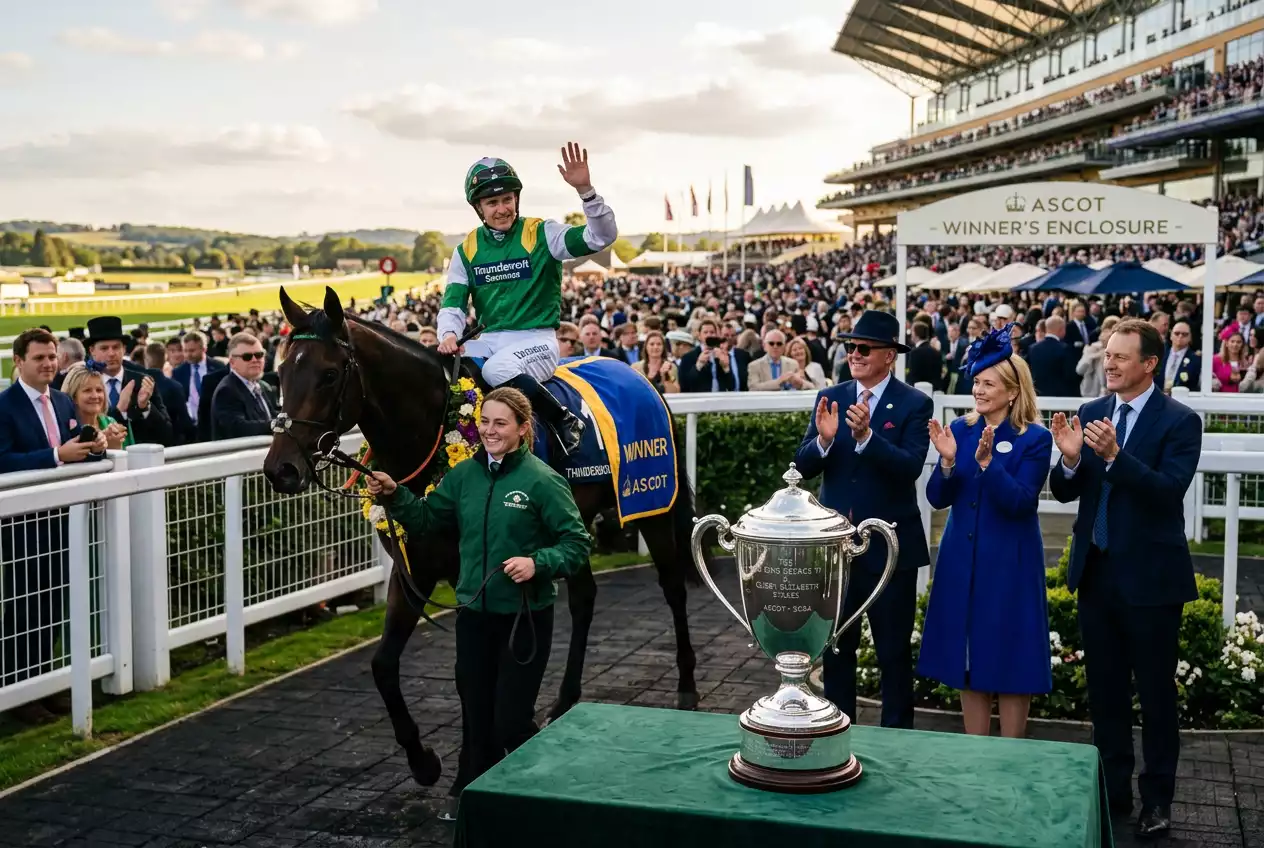
Five million viewers tuned in to Royal Ascot on ITV in 2025, with viewing figures for the final day jumping more than 20 percent compared to the previous year. ITV has since signed a new four-year deal for exclusive free-to-air coverage of major race meetings from 2027 through 2030, securing terrestrial visibility for the sport’s flagship events.
The tension is between a sport growing its audience and prize money while losing betting turnover and horse numbers. My reading: British racing’s premium tier — big festivals, Pattern races, heritage handicaps — is thriving. The everyday card at a regional track is under pressure. BHA data confirms this: average turnover per race on Premier Fixtures was broadly flat in Q1 2025, while Core Fixture turnover per race fell 14.4 percent. If you are a punter, this bifurcation matters — the depth of competition, field quality and market accuracy all depend on which tier of racing you engage with.
Technology Reshaping the Betting Experience
The way odds are compiled, the way form data is processed, and the way you interact with a betting platform are all being reshaped by artificial intelligence and real-time data analytics. This is not speculative — it is already happening. More than 42 percent of bettors globally now prefer platforms that offer AI-enhanced race data in real time. Over 60 percent of mobile users engage with apps that include predictive analytics features. One major UK exchange reported a 28 percent reduction in transaction processing delays after implementing AI-driven automation for bet settlement.
AI in horse racing betting operates on two levels. At the operator level, machine learning models help compile odds, manage risk and detect unusual betting patterns. At the punter level, a growing number of platforms offer predictive analytics tools that synthesise form, going, pace and historical patterns into probability assessments. These tools are supplements to your own analysis, not replacements for it — no model can fully account for the chaos of live horse racing.
The practical impact is threefold. First, odds are increasingly machine-generated, meaning pricing inefficiencies may be shorter-lived than five years ago. Second, free and paid data tools give you access to speed figures, sectional timing and trainer pattern analysis that would have required a dedicated team a decade ago. Third, in-play betting is getting faster and more granular, with some platforms updating odds continuously based on GPS tracking and real-time running positions.
My advice: use the tools, but do not outsource your judgment. The punters I know who consistently find value combine data platforms with deep course knowledge and race-watching instinct. No algorithm replicates the insight you get from watching a horse’s ears flatten turning into the straight, or noticing a jockey switch hands at the furlong pole. Technology gives you better inputs; making sense of those inputs is still a human skill.
Frequently Asked Questions
What is each-way betting in horse racing and when should I use it?
An each-way bet is two bets in one: a win bet and a place bet on the same horse, at the same odds. If your horse wins, both parts pay out. If it finishes in a place position (typically top 2 in fields of 5-7, top 3 in fields of 8-15, top 4 in fields of 16+), only the place part pays at a fraction of the win odds — usually one-quarter or one-fifth. Each-way is most valuable in large-field handicaps where your selection has a strong chance of placing and the place fraction still represents a profitable return.
How do horse racing odds work in the UK?
UK horse racing odds are primarily displayed in fractional format — for example, 5/1 means you profit five pounds for every one pound staked. Decimal odds are increasingly common, especially on exchanges: the same price would be shown as 6.00, representing your total return per unit staked including the stake. Both formats express the same thing mathematically. Bookmakers build a margin (the overround) into their odds, meaning the implied probabilities of all runners in a race add up to more than 100 percent. Understanding this margin is the first step to identifying value.
What does Best Odds Guaranteed mean and which bookmakers offer it?
Best Odds Guaranteed (BOG) is a promotion where a bookmaker promises to pay you the higher of your chosen early price or the Starting Price at the off. If you take 5/1 in the morning and the SP drifts to 7/1, you are paid at 7/1. If the SP shortens to 3/1, you keep your 5/1. Most major UKGC-licensed bookmakers offer BOG on UK and Irish racing, though the specifics vary — some exclude all-weather meetings, cap the maximum payout uplift, or limit BOG to certain bet types. Always verify the terms for each meeting.
How do I read a horse racing form guide?
A form guide displays each horse’s recent race history as a string of numbers and letters: 1 means won, 2 means second, 0 means finished outside the places, P means pulled up, F means fell. A slash separates different seasons. Beyond the raw figures, pay attention to the going conditions for each run, the class level of the race, the course and distance, and the jockey-trainer combination. Building a profile that combines all of these elements gives you a far more reliable picture than any single data point in isolation.
What is the difference between flat racing and National Hunt for betting?
Flat racing takes place on level ground without obstacles, primarily from April to October, with distances ranging from five furlongs to over two miles. National Hunt racing involves hurdles and steeplechase fences, runs mainly from October to April, and covers longer distances that test stamina and jumping ability. From a betting perspective, flat racing rewards analysis of draw position, pace, and speed ratings, while National Hunt rewards course knowledge, jumping form and stamina assessments. Average field sizes also differ: 8.90 on the flat versus 7.84 over jumps in 2025, which directly affects each-way terms and market competitiveness.
Is horse racing betting legal in the UK and how is it regulated?
Horse racing betting is fully legal in the UK for adults aged 18 and over. The industry is regulated by the UK Gambling Commission under the Gambling Act 2005. All operators must hold a UKGC licence, which imposes conditions around customer verification, fund protection, responsible gambling and dispute resolution. Licensed operators also contribute to the Horserace Betting Levy, funding prize money, integrity services and equine welfare.
What are affordability checks and how do they affect horse racing bettors?
Affordability checks are financial assessments triggered when a bettor’s deposits exceed certain thresholds. Since February 2025, the enhanced check threshold has been set at 150 pounds in net monthly deposits. When triggered, an operator may request evidence of income such as payslips or bank statements to assess whether your level of gambling is affordable. The Racing Post Big Punting Survey found that 23.7 percent of respondents had been subjected to these checks and 61 percent said they would refuse to provide financial documents. The checks have contributed to falling betting turnover and, according to industry data, have driven some bettors toward unlicensed operators.
Created by the ”Racing Horse Betting” editorial team.